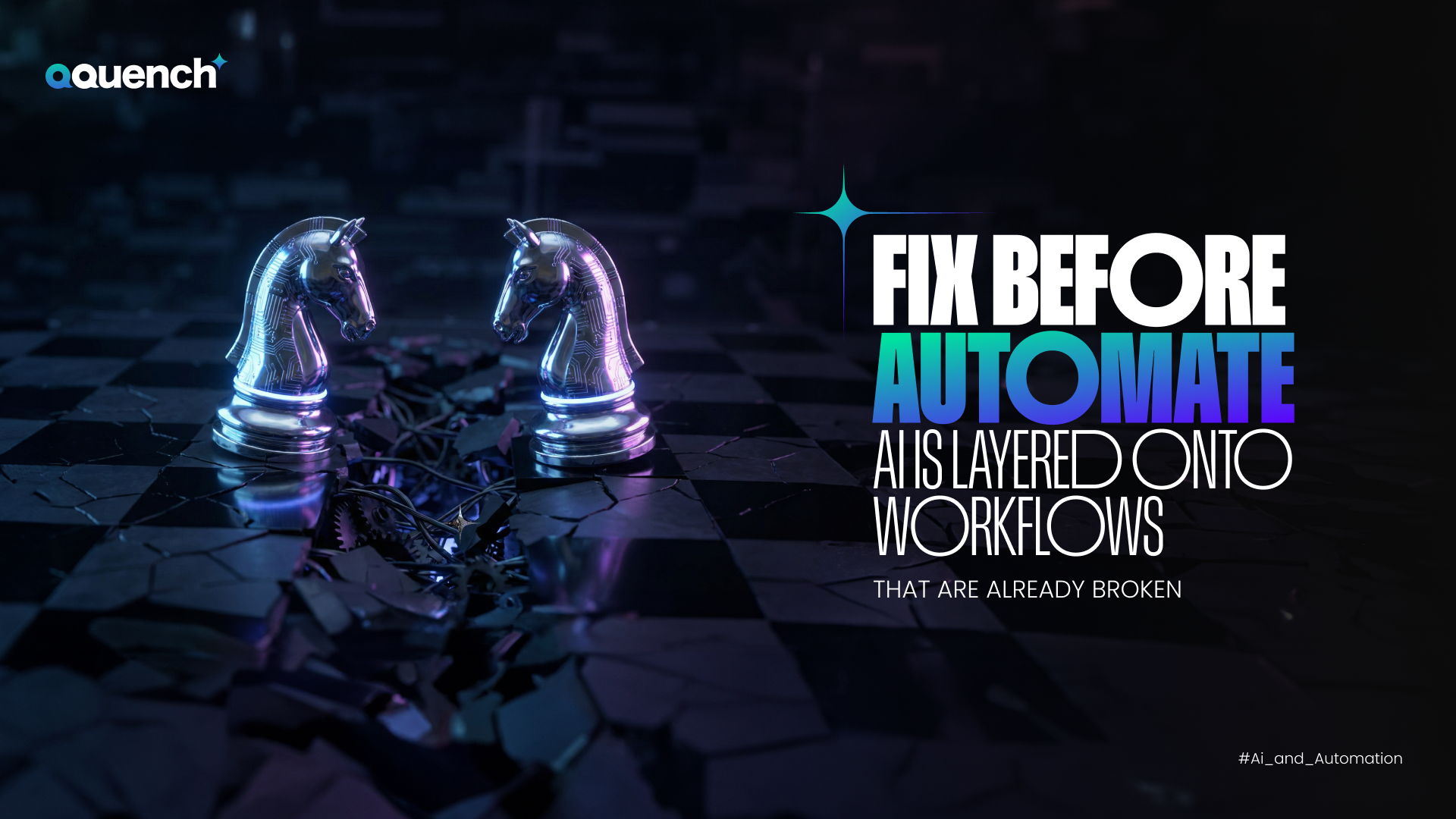
AI Does Not Heal Process Debt
AI adoption often begins with optimism.
Models promise:
- Prediction
- Optimization
- Automation
But AI inherits the workflow it enters.
If the workflow is broken, AI scales the breakage.
As established in Why Automation Often Increases Complexity, automation amplifies existing design problems.
Broken Workflows Become Faster Failures
AI accelerates:
- Decisions
- Routing
- Execution
When inputs are flawed, outputs fail faster.
Gartner research confirms that AI initiatives fail when underlying processes are not stabilized first. Learn more
AI Inherits Ambiguity and Exceptions
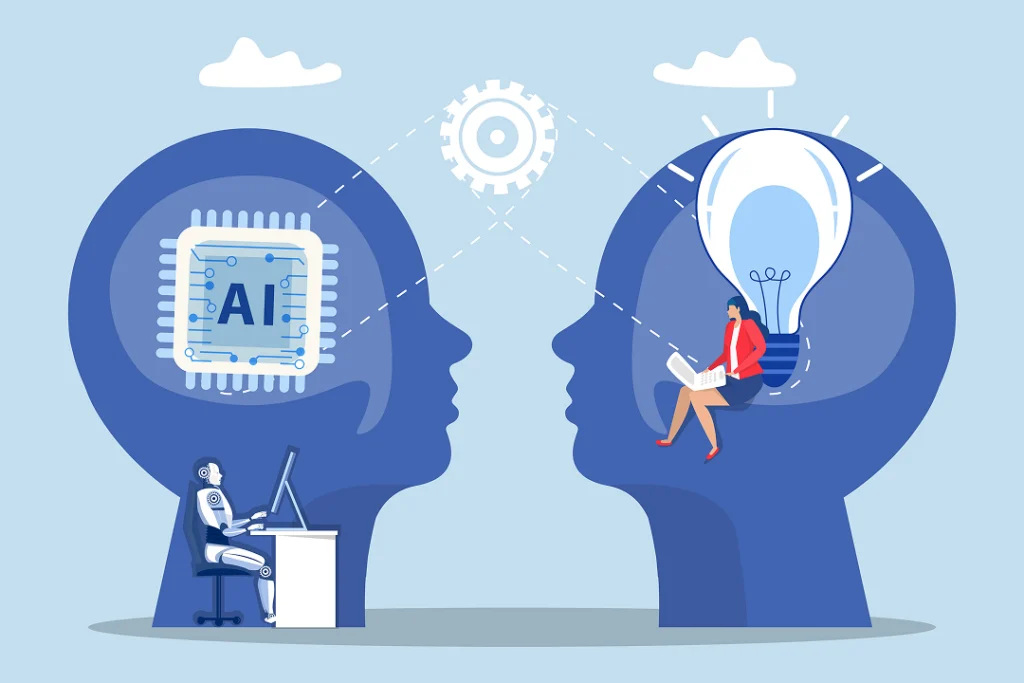
AI models require:
- Clear signals
- Stable rules
- Defined ownership
Broken workflows contain:
- Conflicting logic
- Edge cases
- Manual overrides
AI does not resolve ambiguity. It operationalizes it.
Nielsen Norman Group research shows that automation without clear recovery paths increases user error and distrust. Read more
Technical Debt Becomes Model Debt
When AI is layered onto poor workflows:
- Training data reflects bad decisions
- Models learn undesirable behavior
- Biases harden
Tech teams then debug models instead of fixing systems.
This mirrors the system inheritance problem described in Why Technology Is Rarely the Real Problem.
Harvard Business Review notes that AI systems amplify existing organizational weaknesses. Learn more
Failures Become Harder to Diagnose
Manual workflows fail visibly.
AI-driven workflows fail:
- Quietly
- Probabilistically
- Intermittently
Root causes become opaque.
As discussed in Ownership Ambiguity Breaks Platform Adoption, unclear ownership magnifies failure recovery challenges.
Fixing Workflows Before AI Changes Outcomes
Responsible AI adoption starts with:
- Simplifying workflows
- Removing unnecessary decisions
- Clarifying ownership
- Designing failure recovery
Workflow Repair vs Workflow Acceleration (Acceleration without repair increases risk.)
This is how AI becomes a multiplier of value, not failure.
AI Scales What Exists
AI does not judge workflows.
It executes them.
Broken workflows produce broken intelligence.
Fix first.
Then automate.
Explore Further:
- Why Automation Often Increases Complexity
- More Tools ≠ Productivity
- Ownership Ambiguity Breaks Platform Adoption
- Why Technology Is Rarely the Real Problem
- AI Automation Services
- AI Workflow Design & Orchestration
Fix Workflows Before You Add AI
Talk to Qquench about preparing workflows for AI so automation improves outcomes instead of amplifying risk.
FAQ: UX and Trust
Why does AI fail on broken workflows?
Because AI accelerates existing flaws rather than correcting them.
Should workflows be redesigned before AI?
Yes. Stable, simplified workflows are a prerequisite for AI success.
Who owns workflow quality in AI projects?
Tech, Ops, and leadership must share responsibility.
How can AI adoption reduce risk?
By fixing processes first and designing recovery paths.