New Platforms, Old Habits
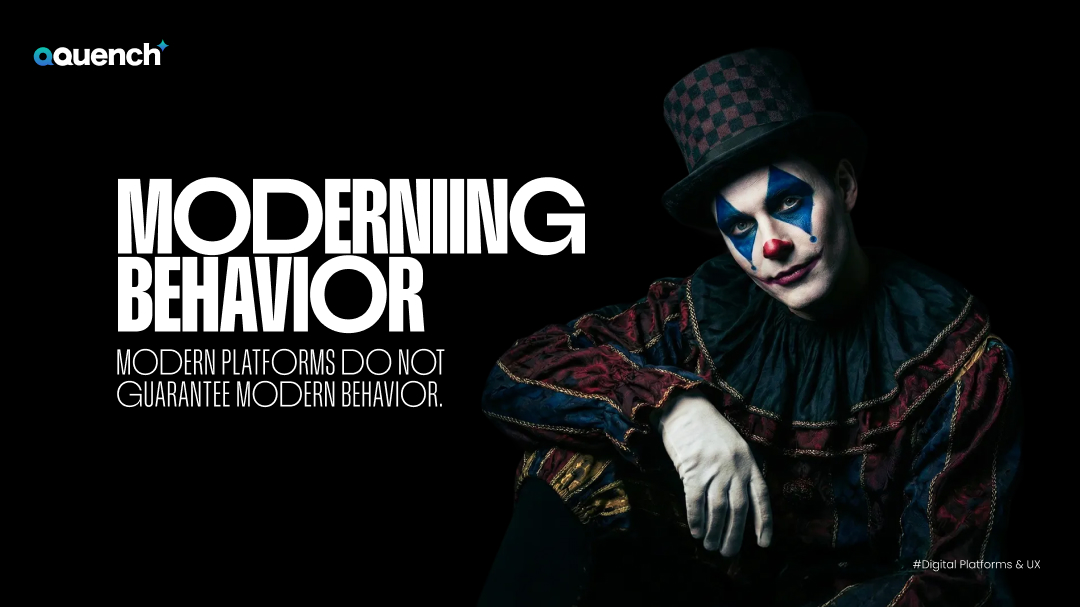
Across enterprise digital environments, platform modernization frequently changes technology without changing behavior.
Organizations modernize platforms to:
- Increase speed
- Improve experience
- Enable transformation
The technology changes.
Behavior often does not.
As established in How Poor UX Erodes Trust in Enterprise Systems, behavior reflects experience, not intent.
Modernization Focuses on Systems, Not Habits

Modernization programs prioritize:
- Architecture
- Performance
- Feature parity
They rarely address:
- Decision habits
- Workarounds
- Learned avoidance
Across enterprise modernization initiatives, behavior is often assumed to change automatically once systems improve.
Gartner research confirms that modernization initiatives fail when behavior change is assumed rather than designed. Learn more
Familiar Behavior Outlives New Interfaces
Even modern systems inherit old behavior:
- Data exported to spreadsheets
- Parallel records maintained
- Old approval paths followed
Interfaces change faster than habits.
Across enterprise workplaces, users often carry established mental models into new platforms regardless of interface improvements.
Nielsen Norman Group research shows that users carry mental models across systems regardless of interface changes. Learn more
Training Explains Features, Not Behavior
Modern platforms are often supported by:
- Feature training
- Release notes
- Enablement sessions
These explain how systems work.
They do not reshape behavior.
Across enterprise environments, training frequently focuses on system functionality rather than behavioral change.
This mirrors the pattern discussed in Training Does Not Change Behavior.
Harvard Business Review reinforces that behavior change requires reinforcement beyond training. Learn more
Modernization Without Reinforcement Recreates Old Problems
When behavior does not change:
- Adoption stalls
- Trust erodes
- Value plateaus
Modern platforms end up supporting legacy workflows.
Across enterprise transformations, modernization often peaks at deployment unless behavioral reinforcement continues afterward.
As seen in Transformation Stalls After Implementation, modernization peaks at go-live without sustained reinforcement.
Designing for Behavior Makes Modernization Matter
Behavior-centered modernization:
- Designs default paths
- Reduces friction for correct actions
- Makes workarounds harder
- Reinforces desired behavior
Across mature enterprise platforms, modernization succeeds only when behavioral design accompanies technical upgrades.
This is how modernization produces lasting impact.
Modernization Is Incomplete Without Behavior Change
Modern platforms improve capability.
Behavior determines value.
Without intentional behavioral design, modernization remains surface-level.
Explore Further: