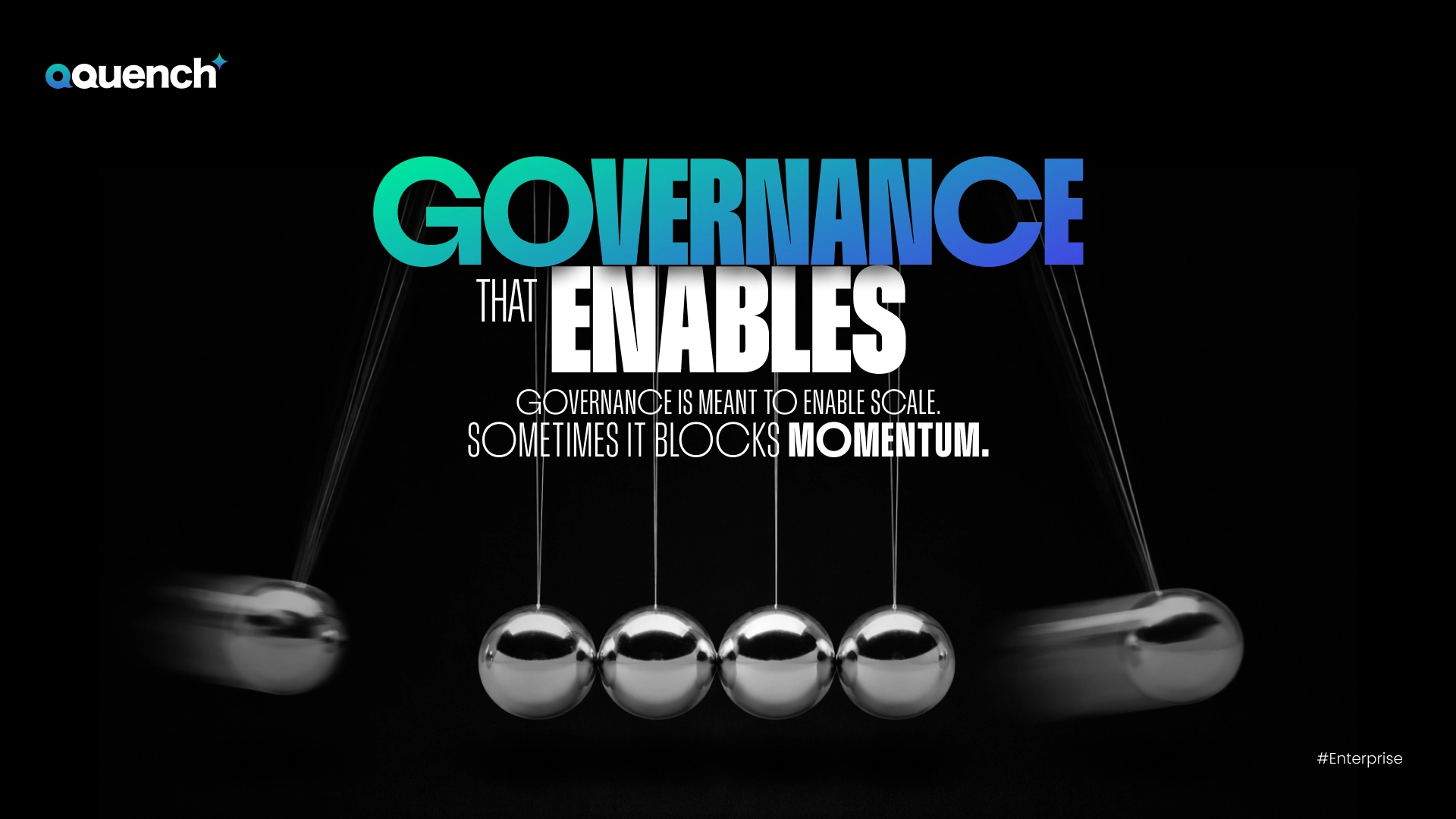
Control Without Flow Creates Risk
Governance is designed to:
Reduce risk
Ensure consistency
Protect trust
But poorly designed governance:
- Delays decisions
- Encourages workarounds
- Increases hidden risk
When governance slows execution too much, teams adapt informally to keep work moving.
As established in Change Fatigue Is a Design Problem, friction accumulates when controls ignore capacity.
Governance Is Added, Rarely Redesigned

Most governance frameworks:
- Accrete over time
- Respond to past failures
- Remain untouched
Controls pile up.
Each incident often introduces a new control, but rarely removes an outdated one.
Harvard Business Review confirms that excessive controls reduce organizational responsiveness:
Slow Governance Creates Shadow Systems
When governance blocks progress:
- Teams bypass controls
- Informal approvals appear
- Shadow IT emerges
This is not rebellion.
It is adaptation.
Workarounds frequently appear when official processes cannot keep pace with operational demands.
As discussed in Too Many Systems, complexity drives workarounds.
Gartner research shows that overly rigid governance increases operational risk:
Compliance Suffocates Capability When Poorly Designed
Compliance-heavy environments often:
- Prioritize reporting over outcomes
- Reward box-ticking
- Discourage judgment
This mirrors the pattern described in When Compliance Training Crowds Out Real Learning.
Governance should protect capability, not replace it.
When compliance becomes procedural rather than practical, decision quality declines.
Enabling Governance Balances Control and Speed
Effective governance:
- Defines guardrails, not gates
- Enables fast decisions within boundaries
- Scales judgment, not approvals
Guardrails allow teams to move quickly while maintaining clear limits.
As explored in Why AI Systems Require Governance, governance must evolve with system complexity.
Nielsen Norman Group research shows that friction-heavy systems reduce compliance quality:
Designing Governance for Momentum
Modern governance design:
- Automates controls where possible
- Clarifies decision rights
- Reduces manual checkpoints
- Monitors outcomes, not activity
Conceptual reference:
Governance as Guardrails vs Governance as Gates
Guardrails enable speed. Gates slow flow.
Organizations that redesign governance for flow reduce both risk and operational delay.
Governance Should Accelerate, Not Obstruct
Governance fails when it slows the organization more than it protects it.
The goal is not fewer rules.
It is better-designed ones.
When governance enables flow, compliance improves and risk drops.
Explore Further:
- Change Fatigue Is Design
- Too Many Systems
- Resistance Is Misdiagnosed
- Compliance Crowds Learning
- AI Needs Governance
- AI Governance & Guardrails
- Enterprise Risk & Automation Design
Design Governance That Enables Speed and Trust
Talk to Qquench about redesigning governance frameworks that protect the organization without slowing it down.
FAQ: Governance & Progress
- Why does governance slow progress?
Because controls accumulate without redesign.
2. Is governance meant to slow decisions?
No. It is meant to enable safe, fast decisions.
3. How can governance enable momentum?
By using guardrails instead of gates.
4. Who owns governance design?
Leadership and risk teams together.