Governance Is Behind Adoption
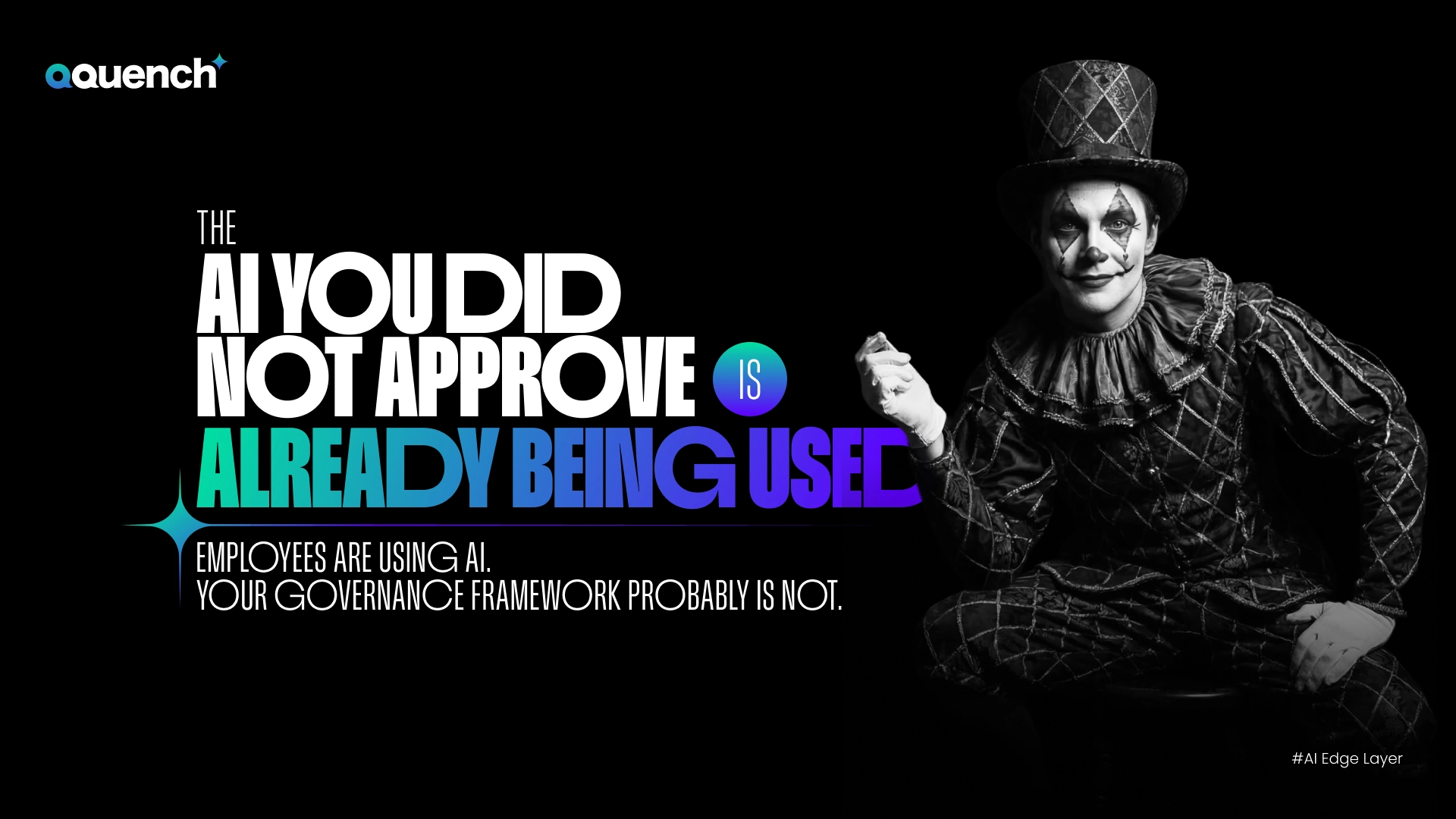
AI adoption is no longer top-down.
It is bottom-up.
Employees:
- Use generative AI for drafting
- Summarize confidential documents
- Automate workflows via browser tools
- Integrate APIs into spreadsheets
Often without approval.
The Stanford AI Index 2024 shows that enterprise AI adoption is accelerating faster than regulatory and governance maturity.
Shadow AI is not malicious.
It is opportunistic.
But opportunistic adoption creates structural risk.
AI tools are increasingly embedded into daily work before organizations formally approve or monitor them.
As explored in Agentic AI Without Governance Is Risk
Autonomy without architecture multiplies exposure.
Shadow AI Is the New Shadow IT
Organizations have seen this before.
Cloud storage.
Messaging apps.
Unsanctioned SaaS tools.
Shadow IT emerged when official tools lagged behind user needs.
Now AI has followed the same pattern.
Gartner predicts that unsanctioned AI tool usage will become one of the primary governance challenges for enterprises in the next three years.
Shadow AI emerges when:
- Official AI policies are unclear
- Approved tools are slow to deploy
- Productivity pressure is high
When official systems cannot keep pace with user needs, employees create their own solutions.
The pattern mirrors what we discussed in:
When systems are complex, employees optimize independently.
The Risk Is Not Just Data Leakage

Leaders often focus on:
- Sensitive data exposure
- Intellectual property risk
- Privacy compliance
Those are real.
But the larger risk is decision distortion.
Employees may:
- Use AI outputs in customer communication
- Make operational decisions based on hallucinated data
- Rely on generated recommendations without validation
NIST’s AI Risk Management Framework emphasizes monitoring, validation, and human oversight for AI outputs.
Without governance, shadow AI:
- Influences decisions invisibly
- Alters workflows informally
- Changes operational behavior silently
Unmonitored AI usage can quietly reshape operational decisions across the enterprise.
This connects directly to:
Blanket Bans Do Not Work
Some organizations respond by banning AI tools.
This approach fails for three reasons:
- Enforcement is impossible at scale
- Productivity pressure drives circumvention
- Innovation slows internally
MIT Sloan research shows that innovation restrictions often push experimentation underground rather than eliminating it.
Shadow AI thrives in policy vacuums.
Prohibition without alternatives accelerates risk.
Restrictive policies often increase unsanctioned experimentation rather than eliminating it.
Governance Must Shift From Control to Enablement
The solution is not elimination.
It is visibility + structured enablement.
Effective enterprise AI governance includes:
- Approved AI tool registry
- Clear usage tiers (safe vs sensitive data)
- Audit logs and monitoring
- Defined escalation pathways
As discussed in AI Needs Governance
Governance frameworks must evolve as quickly as tools.
OECD AI Principles emphasize transparency, accountability, and responsible innovation in AI systems.
Governance frameworks should enable safe experimentation rather than suppress adoption.
Shadow AI Signals Organizational Readiness Gaps
Shadow AI usage often indicates:
- Slow official innovation pipelines
- Fear-based compliance culture
- Lack of digital experimentation frameworks
This mirrors themes in:
Automation Readiness vs Automation Ambition
If employees are adopting tools independently, it signals demand.
Demand should be structured, not suppressed.
Shadow AI often reveals where official technology strategy is lagging behind user needs.
Designing for Managed AI Adoption
Enterprises that manage shadow AI effectively:
- Provide sanctioned AI sandboxes
- Define safe experimentation boundaries
- Clarify decision authority
- Train on responsible usage
This is not just governance.
It is systems architecture.
Organizations that design safe experimentation environments reduce unsanctioned tool usage.
AI adoption must be designed — not discovered accidentally.
The Invisible AI Layer Is Already Operating
Shadow AI is not a future risk.
It is a current reality.
The organizations that succeed will:
- Make invisible usage visible
- Replace bans with frameworks
- Build guardrails instead of walls
AI transformation does not begin with technology.
It begins with governance maturity.
Explore Further:
- Agentic AI Without Governance Is Risk
- AI Needs Governance
- AI Fails Quietly
- Too Many Systems
- AI & Automation Services
Bring Shadow AI Into the Light
Talk to Qquench about designing AI governance frameworks that enable safe, scalable innovation.
FAQ
- What is shadow AI?
Shadow AI refers to employees using AI tools without formal approval, oversight, or governance.
2. Why is shadow AI risky?
It creates invisible decision-making layers, data exposure risks, and governance gaps.
3. Should enterprises ban AI tools?
No. They should implement structured governance and sanctioned experimentation frameworks.
4. How can organizations manage shadow AI?
By defining usage tiers, approved tools, monitoring protocols, and clear oversight mechanisms.