Fatigue Appears After Too Much, Too Fast
Organizations rarely run a single change.
They run many.
Platforms.
Policies.
Behaviors.
This emerges when nothing is removed.
Change pressure accumulates when organizations layer initiatives without reducing existing operational load.
As established in Transformation Feels Heavy, weight accumulates before failure is visible.
Change Fatigue Comes From Overlapping Demands

Fatigue increases when:
- Multiple initiatives overlap
- Prior work is not retired
- Timelines compress
People cannot absorb infinite change.
Organizational capacity is finite, even when strategic ambition is not.
Harvard Business Review confirms that excessive simultaneous change reduces execution quality:
Communication Is Used to Compensate for Design Gaps
When it appears:
- More messaging is added
- More town halls are scheduled
- More motivation is demanded
Communication increases load.
Messaging often expands when structural change design remains unresolved.
As discussed in Resistance Is Misdiagnosed, messaging cannot fix structural overload.
Gartner research shows that change success depends more on pacing than persuasion:
Fatigue Is Strongest Where Work Is Heaviest
Change concentrates in:
- Frontline teams
- Middle management
- Cross-functional roles
Those closest to execution absorb the cost.
Operational layers experience the cumulative burden of overlapping transformation efforts.
This mirrors the overload described in Too Many Systems.
Sustainable Change Requires Recovery Design
Healthy change systems:
- Sequence initiatives
- Remove old processes
- Allow stabilization
- Protect cognitive capacity
Recovery periods allow organizations to consolidate new behaviors before introducing additional change.
As shown in Why Global Initiatives Stall Locally, ignoring capacity limits breaks adoption.
Nielsen Norman Group research shows that continuous cognitive overload leads to disengagement:
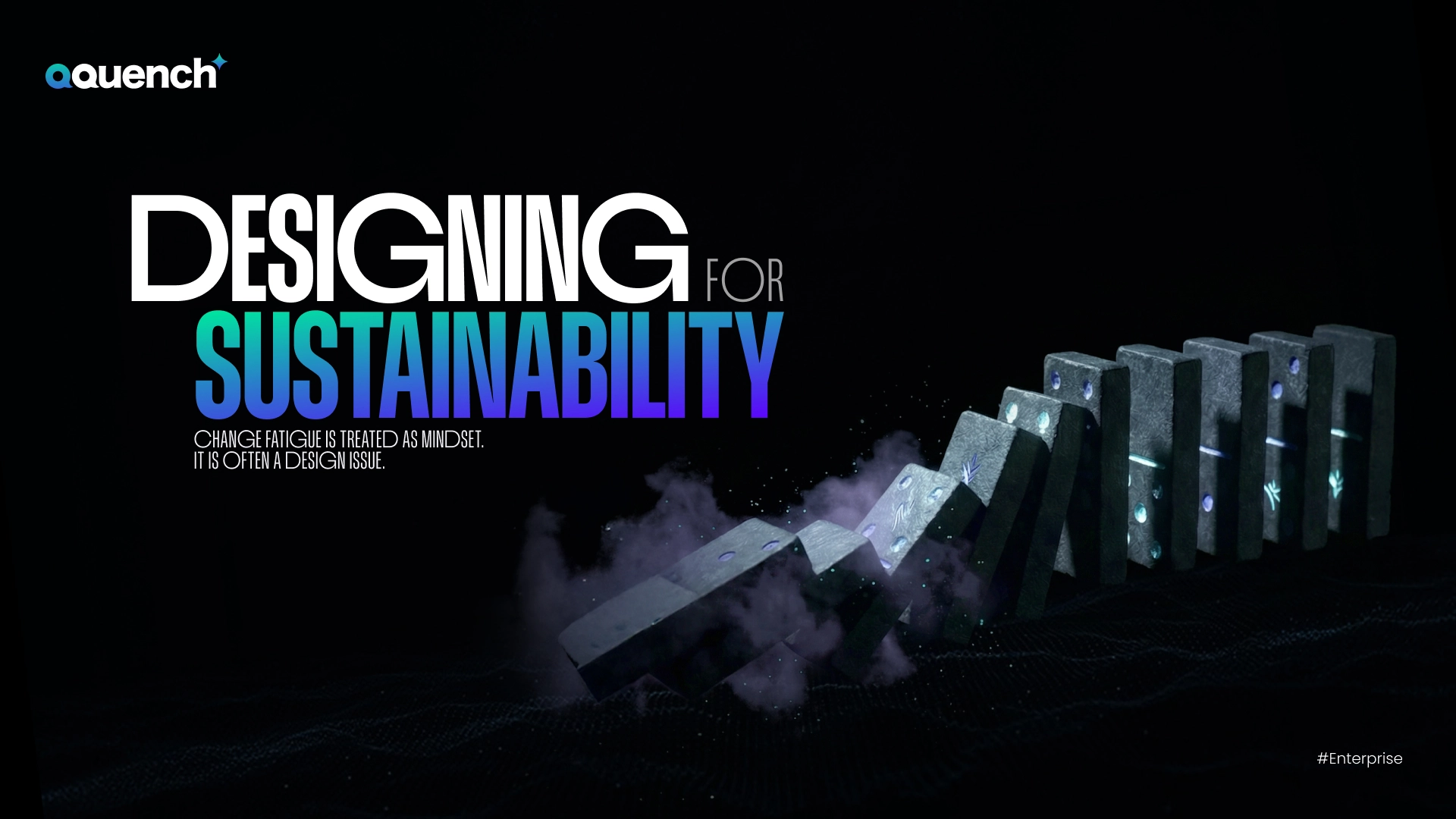
Designing for Change Sustainability
Sustainable change design includes:
- Explicit sunset plans
- Clear priority signals
- Recovery intervals
- Fewer simultaneous demands
Conceptual reference:
Change Velocity vs Absorption Capacity
Change fails when velocity exceeds capacity.
Successful organizations treat change capacity as a managed resource, not an unlimited one.
Fatigue is Feedback
Change fatigue is not a morale issue.
It is a design flaw.
Organizations that listen to this redesign change.
Those that ignore it burn capacity.
Explore Further:
- Transformation Feels Heavy
- Resistance Is Misdiagnosed
- Too Many Systems
- Knowing ≠ Doing
- Platform Adoption Low
- Change & Adoption Design
- Learning Experience Design
Design Change That People Can Sustain
Talk to Qquench about sequencing, simplifying, and designing change that does not exhaust your organization.
FAQ: Change Fatigue
Why do employees experience change fatigue?
Because multiple initiatives stack without removing old work.
Is change fatigue a mindset issue?
No. It is a design and capacity issue.
How can organizations reduce change fatigue?
By sequencing initiatives and allowing recovery.
Who owns change fatigue?
Leadership decisions create or prevent it.